Negative Persona Identification for B2B Content Teams
Identifying who your content shouldn't attract saves resources and improves conversion.
Negative persona identification gives B2B content teams an ongoing editorial filter based on who their content is not for. When teams use the filter to choose topics, gates, and customer stories, they waste less work and focus on people likely to buy and stay.
Why content teams accumulate waste before they notice it
A content team keeps publishing and traffic keeps growing, but nobody can link what it publishes to pipeline. The calendar looks healthy. So does the dashboard, until someone checks what those visitors do next and finds lots of marketing-qualified leads, low close rates, and salespeople who ignore content-generated leads. The machine is working hard at the wrong job.
Without a defined view of who content should not attract, “more reach is better” becomes the default answer to every editorial decision. Another broad topic gets approved because it promises to bring in another audience. Someone else is left to work out whether that audience can use, afford, or stay with the product.
Sales spends time on prospects who will never close, while support and customer success take on customers whose needs cost too much for the product to meet. Low conversion and high churn are symptoms that show up later when teams target the wrong people. By the time those symptoms become obvious, the team has already built more content to attract more of the same people.
What a negative persona actually is, and what it is not
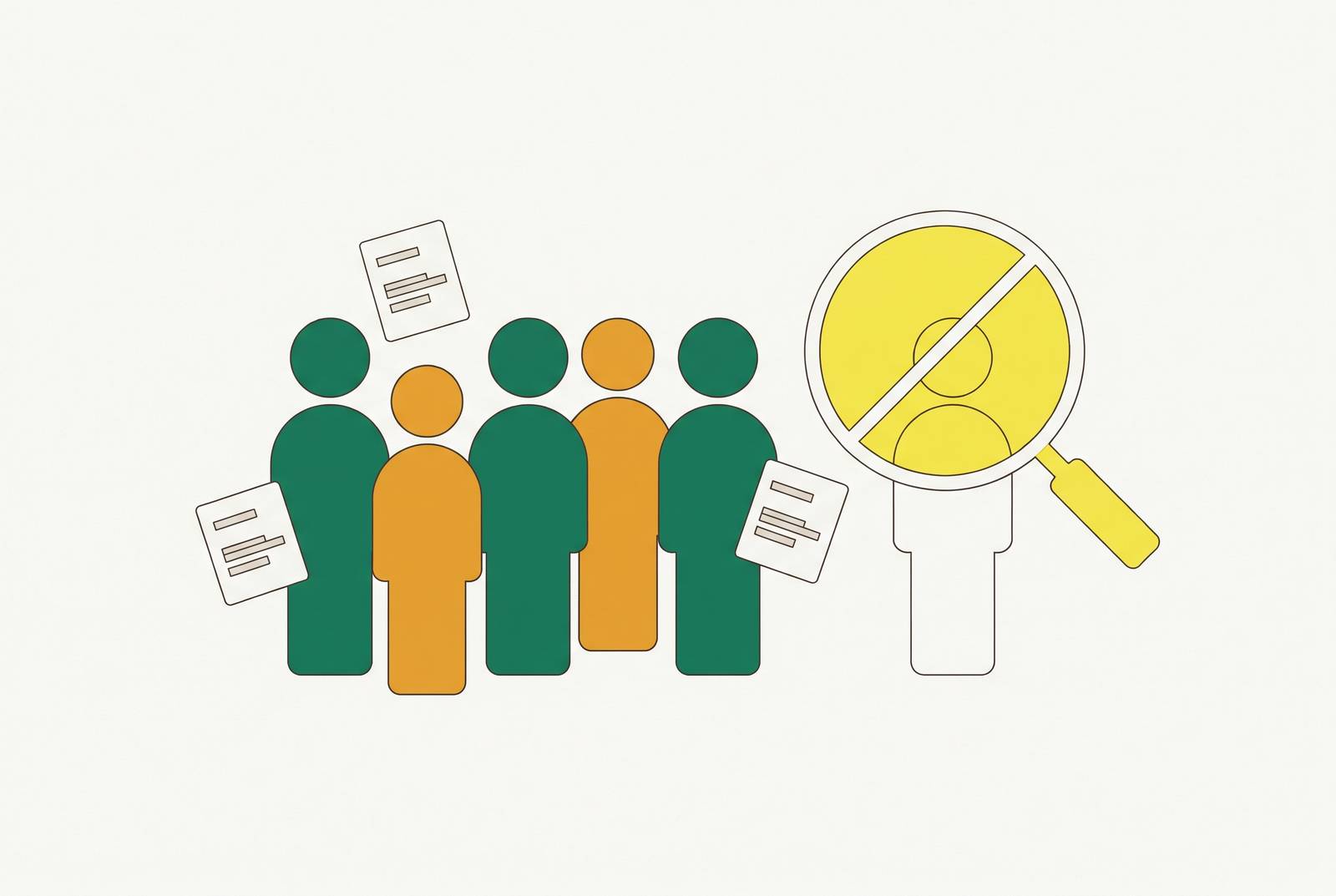
A negative buyer persona is a collective profile of customers a business does not want to attract because serving them drains resources without producing enough value. It is not a personality assessment. A perfectly pleasant prospect can still lack the budget, use case, or expectations that make a commercial relationship work.
It is the mirror image of the ideal customer profile, or ICP. The ICP describes who recognizes the product as the right solution, while the negative persona describes who consumes content, occupies sales time, and leaves without converting or staying. Poor fit can take several forms, including low lifetime value, disproportionate support demands, persistent price sensitivity, and a mismatch in company size or budget. Incorrect expectations add another kind of cost when customers remain dissatisfied despite accurate delivery and generate negative reviews.
A negative persona is useful only if it helps distinguish the audience a piece should serve from the audience it might accidentally recruit. The team should use it alongside the positive persona when deciding what genuine buyers need to know.
Where the signal comes from — building negative personas from real data
The first pass can begin this quarter with existing customer records. Even an imperfect first pass needs evidence of who buys once, cancels frequently, overwhelms support, or negotiates exclusively on price. Profiles based on assumptions about difficult customers reproduce the same biases as ideal personas assembled from wishful thinking.
To turn those records into profiles, the team should combine them with sales and support input. Marketing sees who arrives, but sales knows which segments fail to complete transactions, and customer success knows which customers demand disproportionate attention or leave fastest. The team needs to identify where those patterns repeat. One difficult conversation is not a segment, and an enthusiastic download is not proof of commercial fit.
The next step is to organize the patterns by firmographic, professional, and behavioral characteristics. These include company size, industry, budget, job title, role, price sensitivity, and engagement patterns. Distinct groups deserve distinct profiles because their content implications differ. A company that cannot afford the product presents a different editorial problem from one that can afford it but expects capabilities the product does not offer.
CRM data also needs context from direct customer conversations. Win/loss interviews and interviews with recently churned accounts can reveal procurement culture, decision-making authority, and expectation mismatches that ordinary fields miss. The team can use those findings as clear negative indicators in the ICP framework, including red flags for accounts that otherwise look like a good fit on paper. Industries with structurally high churn or company sizes that never expand beyond the initial contract may qualify. The team should then name, describe, and share the resulting profiles across the customer journey.
Three recurring negative persona archetypes that appear across most B2B pipelines
The budget tourist is enthusiastic right up to the commercial part. They attend demos, request detailed proposals, and join discovery calls before revealing no budget, no authority, or no real timeline. Educational content about the problem space naturally attracts this reader, but that is no reason to stop teaching. The content implication is to leave broad education ungated and reserve gated, high-specificity assets for signals that help distinguish genuine buying intent.
The feature requester treats the sales process as a product feedback session. They ask for things the product cannot do and take up time from sales and engineering with no plans to buy. Content that leans heavily on flexibility and customization can invite this mismatch by suggesting that every use case is welcome. The roadmap is not a wish-granting service. The editorial response is to describe what the product actually does well for the ICP rather than imply an appetite for every possible requirement.
The price-only buyer evaluates the relationship through discounts and cheaper alternatives. Content that focuses on how affordable the product is, its free-tier features, or how it compares with cheaper competitors draws in this persona. That framing makes price the main reason to arrive, even when the business needs buyers who value outcomes. A bargain can attract the wrong crowd. The content implication is to anchor the argument in outcomes and ROI, giving buyers who measure value a reason to recognize themselves.
How negative personas change the editorial decisions teams make every week
The lesson for editorial leads is to apply these profiles before approving work. A profile in Notion cannot veto a weak brief. Before launching or expanding a topic cluster, the team should identify which negative persona it is most likely to attract and weigh that against its intended audience. Price-only queries, free-tool comparisons, and early-career education can keep adding unsuitable readers as articles rank. Startup content teams should identify their two or three most common negative personas before building clusters, because organic growth can compound a targeting mistake just as readily as a good decision.
That same distinction should govern whether an asset earns a gate. Gating general education restricts visibility while capturing low-intent contacts, filling the CRM with leads that sales learns to ignore. A form submission is not a purchase intention. Broad awareness content should remain ungated so that readers can learn and non-ICP visitors can recognize that the product is not for them. Gated assets should offer the specificity that signals genuine buying intent from ICP-matched accounts, rather than simply charge an email address for basic information.
Audience mismatch can also demand a framing change. If a mid-market or enterprise business keeps attracting small companies, changing an article into a video does not address the underlying invitation. The team should review topic selection and tone for the complexity, scale, and specificity that larger buyers recognize. The content should describe a problem that resembles the buyer’s actual work.
A hero story about a small, price-sensitive customer tells similar buyers that they belong in the funnel, even if the business now needs a different audience. B2B buying groups look partly at the customers a vendor already serves to decide how much to trust it. Editorial leads should therefore tag stories by the ICP segment they support and avoid promoting those that over-index on poor-fit industries or company sizes. Sharing the profiles across sales, PR, and product gives those decisions a common basis rather than leaving each function with its own version of the audience.
Why fewer but better-fit leads improve the math for the whole revenue team
The predictable objection is that pipeline targets require volume. They do, but non-ICP attention is noise. Filtering out poor-fit audiences can reduce marketing-qualified leads, and that reduction is not automatically a failure. What happens to the prospects who remain matters more than how crowded the top of the funnel looks.
Better qualification changes how sales spends its time. Recognizing a budget tourist or price-only buyer in the first discovery call rather than the fifth reduces calls spent on deals that were never going to close. Close rates can improve and sales cycles can shorten as that wasted effort falls. The benefit also extends beyond the contract. Customers whose content-led expectations match the product are better placed to use it fully and stay, improving retention and the economics of acquiring them.
None of this makes lead volume irrelevant. A smaller funnel is useful because it contains a higher share of suitable prospects. Marketing therefore needs to be measured on lead quality rather than rewarded simply for reach or contact volume. A team told to keep out poor-fit leads but judged on how many leads it brings in has been handed a filter and told to remove the mesh.
Making negative personas a permanent part of the editorial operating system
To make the filter routine, teams should put it where recurring content decisions happen. Each profile needs a named archetype, behavioral and firmographic characteristics, and explicit content implications, documented with the same rigor as positive personas. SDRs, other sales staff, content writers, and marketing managers all need to be able to see the profiles. Keeping the profiles in a shared work system lets people use them in daily decisions, while a slide deck from a strategy offsite leaves them stranded. People can then spot signs of poor fit and pass them to the right team as they work.
The profiles also need a quarterly review. Markets, products, and customer bases change, so an archetype that described a real problem two years ago may no longer explain the main leak in the funnel. CRM data and sales feedback should test which segments churned most, which deals consumed the most effort without closing, and which pieces attracted the most non-converting traffic. Without it, a tool designed to sharpen targeting can preserve an outdated assumption.
Before a story is promoted, the team should tag it for ICP fit and keep poor-fit examples out of primary distribution, even when the writing is excellent. A compelling story can still recruit badly. Stories representing the right industries, company sizes, and use cases should instead be collected, structured, and deployed where similar buyers evaluate vendors.
The strongest reason to establish this system early is compounding. An organic piece that ranks can keep attracting its intended audience for years at decreasing marginal cost, whether that audience is suitable or not. Early-stage teams that define negative personas before building topic clusters avoid more than a future editing bill. They avoid having to undo the audience expectations created by a year of misaligned content. The expensive rework is changing who believes the business was built for them.