Champion Persona vs Economic Buyer Persona in B2B Sales
Each persona needs different proof to move a deal forward because they answer different questions.
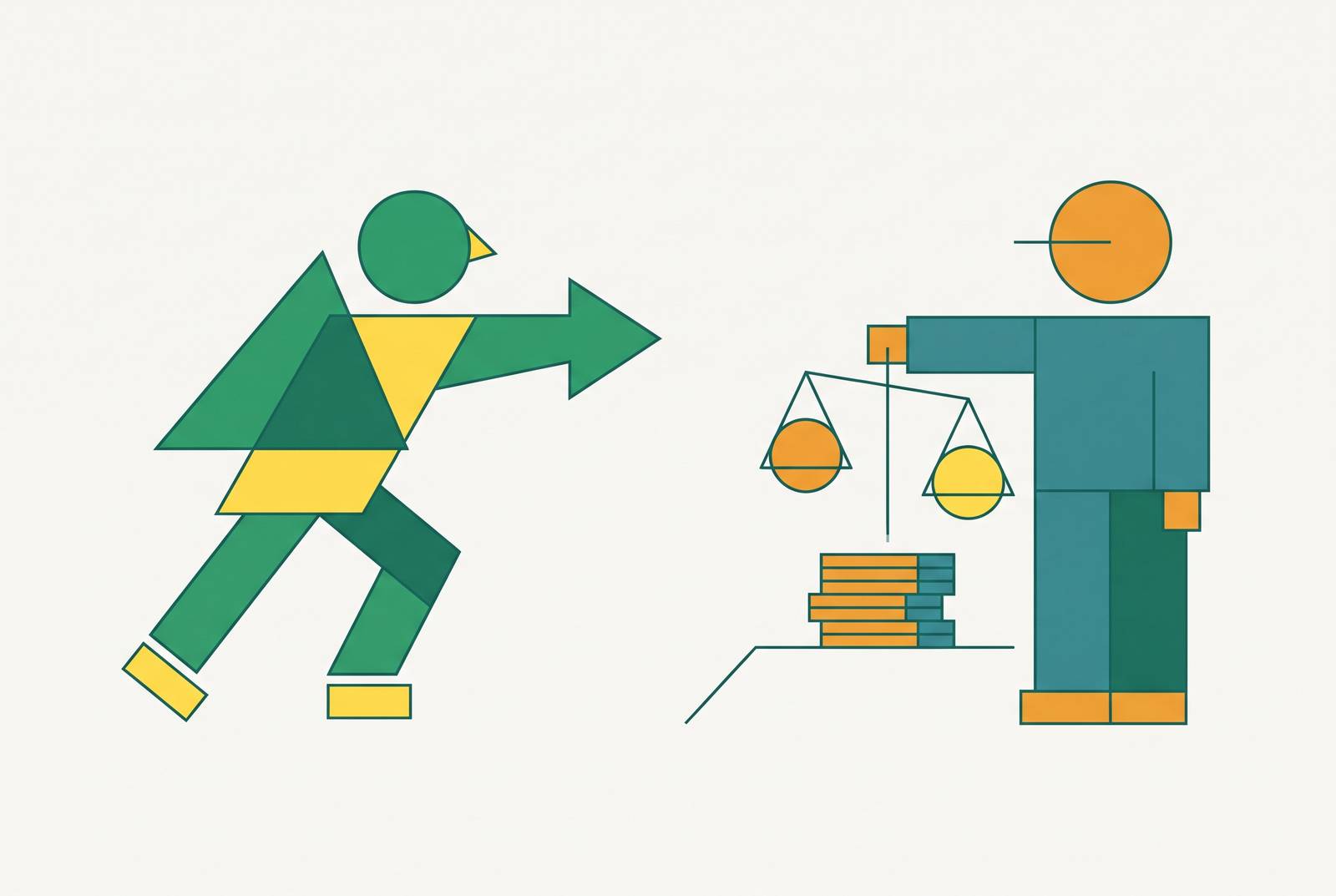
In B2B sales, Champion and Economic Buyer personas need different proof because each has different risks to face. The Champion sells upward to get a problem solved, while the Economic Buyer protects downward against a bad investment. Sales teams that treat them as interchangeable leave both underprepared. A parallel sales motion replaces a deck addressed to “the decision-maker” with evidence each person can use.
Why the Champion and Economic Buyer operate on entirely different internal logic
Deals stall when sales teams take a Champion’s excitement to mean that an Economic Buyer is ready to approve. A contact can love the solution, coordinate the evaluation, and still lack the authority to release the budget. The gap is not simply seniority, either. These people have different responsibilities inside the same decision, so progress with one does not automatically mean progress with the other.
The Champion experiences what is going wrong in day-to-day work and wants it fixed. They often start the research, compare options, and bring other stakeholders into the evaluation. The Economic Buyer decides whether to approve the spending or has a strong say in that decision, weighing business value, cost, risk, and the effect on strategy. Solving the problem is necessary, but it does not by itself make the investment defensible.
That difference persists even when both people attend the same meeting. When reviewing a cybersecurity platform, a security engineer wants to know how integration will work, while a CISO weighs the risk to the business. Procurement examines contractual terms, and IT administration considers implementation effort. The same demonstration can therefore leave each stakeholder with a different unanswered question. The Champion needs help making a case that answers those concerns, while the Economic Buyer needs reasons to commit the money.
What the Champion is actually doing when they advocate internally
A Champion is doing sales work inside an organization that did not ask them for a pitch. They build consensus, gather executive support, and defend a preferred vendor to colleagues with competing concerns. Their credibility goes into the deal before any budget does. If the vendor fails, their name remains attached to the recommendation. Being a friendly contact is the easy part.
Their internal position makes that exposure specific. The limits of their software stack shape what they can recommend, while the regulatory risks they face shape what they must explain. The KPIs tied to their bonus or performance review define what a successful outcome actually looks like for them. A workflow improvement is not an abstract benefit when someone is accountable for the workflow. Trouble with implementation also falls on the person who persuaded colleagues to accept it, along with the vendor.
The Champion therefore needs more than reassurance that the product works. A skeptical colleague may challenge the need for change, IT may question the fit, and finance may ask why a cheaper option will not do. Each objection needs an answer that holds up when a sales rep is not there. The lesson for sales teams is to supply reusable arguments, relevant evidence, and responses to those objections. A polished result with no explanation of the decision leaves the Champion writing the difficult half of the pitch alone.
What the Economic Buyer is protecting when they evaluate a deal
The Economic Buyer evaluates whether approving the investment is a decision they can defend. Product quality contributes to that judgment, but it is not the whole judgment. Their lens includes return on investment, payback periods, total cost of ownership, and strategic business value. A feature demonstration answers a different question. It shows what the product can do.
Their caution is part of the job. They are protecting the organization, and themselves, against a poor allocation of capital or downstream risk. That makes requests for credible ROI math and comparable customer outcomes rational. The relevant comparison is not simply between buying and spending nothing. It also includes the risk of leaving the problem unsolved or choosing a competitor.
6sense research finds that roughly four in ten buying group members come from departments outside the function that will use the solution. An Economic Buyer may therefore have little direct relationship with the pain that motivates the Champion. They can also enter late and stop a deal that has taken months to build. Sales teams in that position need to connect the investment to executive priorities and measurable outcomes, rather than treating financial scrutiny as an unfortunate interruption to an otherwise excellent demo.
How the buying process runs before either persona talks to a sales rep
Much of this evaluation happens before a vendor gets a chance to explain anything. B2B buyers spend most of the time it takes to make a purchase doing their own research through digital content, peer communities, and AI-assisted discovery. The Champion usually starts first, investigating the problem and building an initial shortlist. The Economic Buyer often arrives later with a different purpose. They are looking for a defensible investment.
Later entry does not mean shared understanding. The two people can form views independently from different materials, while other stakeholders conduct evaluations of their own. 6sense research finds that a B2B buying group usually has around ten people. A vendor may appear operationally convincing to one reader and financially unproven to another without ever hearing either judgment.
The mismatch can begin with perfectly accurate content. ROI-focused material may reach the Champion without explaining how operations would improve, while a feature comparison may reach the Economic Buyer without addressing investment risk. Both people have encountered the vendor, but neither has necessarily gained useful proof. The 2025 Edelman-LinkedIn report identifies internal buying-group misalignment as a common reason B2B deals stall. By the time sales enters the conversation, the task may already be to reconcile competing views.
Why a single case study cannot serve both personas equally well
The case study is where those competing needs often collide. Both personas may read it, but the Champion wants to understand how to defend the choice, while the Economic Buyer wants evidence that the investment pays off. A story written for an imagined average of those readers usually gives neither what they need. The average reader does not approve the budget. Nor do they face the skeptical colleague after the vendor leaves.
An outcome-only story makes the Champion reconstruct the decision logic. It may report a strong result without explaining why the customer chose the solution or what alternatives they considered. Conversely, a long operational narrative that buries the financial result makes the Economic Buyer hunt for the reason to invest. When buyers cannot see the value clearly, cost gives them something to focus on. Pricing pressure can begin before anyone calls it a negotiation.
A case study can lead with the business win, then explain the operational change, and add trust signals that help both readers judge the choice. Proof placed next to the claim it supports also saves the reader from searching elsewhere for substantiation. This gives the Economic Buyer a clear financial entry point and the Champion a deeper account of how the result happened.
What each persona needs in their hands before they can move the deal forward
For sales teams, the practical distinction is between proof that supports advocacy and proof that supports approval. The Champion needs guides, benchmarks, research that validates the problem, and case studies built around operational change. The Economic Buyer needs ROI analysis, executive briefs, and customer results that lead with what happened to the finances. More content is not the cure here. The useful asset answers the question blocking that person’s next internal conversation.
For the Champion, a usable case study explains why a comparable organization chose the vendor, what alternatives it considered, and what happened afterward. It provides language for defending the choice. Answers to objections help when technical evaluators or procurement stakeholders question the choice. These materials must work when forwarded, referenced in a Slack thread, or used to frame a conversation with the CFO. Their value depends on what the Champion can do with them.
For the Economic Buyer, the same customer’s experience needs a clear business win and enough context to judge its relevance. A generic claim about saving time does not establish the investment case. Because the Champion may be the person delivering the material, it needs to be scannable, credible, and conclusive in its opening lines. This is also why an ideal customer profile cannot substitute for a persona. The ICP identifies which accounts to target, while the persona identifies whom to engage and what that person needs to believe.
How to build a persona profile that actually changes how you sell
A useful persona changes what sales says, sends, or prioritizes. If it changes none of those things, it is office decor. A useful persona starts with a buying responsibility. A Technical Validator might be a Director of IT at one account, a VP of Information Security at another, or a Solutions Architect elsewhere. The title changes, but the responsibility gives the profile its value.
To build that profile, sales and marketing teams should begin with closed-won and closed-lost data. CRM records reveal conversion patterns and show which roles engaged with which content at which stage. Accounts that bought and stayed provide a starting point for interviews about the situation before purchase, the trigger for evaluation, and what nearly stopped the deal. A sketch of someone’s demographics cannot explain why a purchase that looked promising nearly died in finance.
Churned accounts belong in that research too. Structured 20-minute discovery interviews can show where proof was missing, something a happy customer has little reason to talk about. The account where an Economic Buyer stopped the purchase may expose a different gap from the account where a Champion secured approval but later lost confidence. Teams should then check the patterns they hear in interviews against product usage, intent signals, and engagement data. Where stated preferences conflict with conversion behavior, the behavior should guide the sales response.
The profile should make it clear which assets to use. A Champion who faces objections to integration needs different help from an Economic Buyer who has questions about payback, even in the same account. Those distinctions need maintenance because committees, titles, and purchase triggers shift. Refreshing personas every two quarters keeps the profiles tied to current evidence. The template is only the container for that work.
What it takes to keep both personas moving through a deal simultaneously
A parallel sales motion serves the Economic Buyer before the Champion has exhausted their ability to advance the case. It does not wait for operational enthusiasm to become financial approval by itself. A Champion who cannot answer risk questions can lose credibility precisely when executive support is needed. Asking them to improvise is handing someone a microphone and hoping they know the song.
For sales teams, the practical response is to measure persona coverage at the account level. Measuring whether both roles have received the proof they need requires more than evidence that someone at the company has engaged. CRM data, sales conversations, customer interviews, intent signals, and closed-won analysis help identify who holds each responsibility in a live account. Those inputs also help distinguish interest from an unresolved objection. An account can look active while its approval case remains untouched.
Specific outcomes, named contexts, and visible decision logic let the Champion forward proof that the Economic Buyer can assess without reconstructing the story. Producing that evidence requires a repeatable case study system. The work includes sourcing stories systematically, structuring them for committee-wide use, and deploying them when each person is making their internal case. As customer interviews and deal outcomes expose new gaps, that system can produce the next piece of proof for the next Champion.