Brand Equity Examples From Customer Proof Campaigns
Dove, Apple, and Airbnb show how reusable customer evidence compounds.

Customer proof campaigns build more than a case for buying. When companies make a habit of gathering, sorting, and sharing customer evidence, they build brand equity that lasts beyond any one deal. The examples below show how that happens, and how B2B teams can use the same mechanism without needing a Super Bowl budget or a customer base visible from space.
Why customer proof campaigns do more than close the deal they're deployed in
A sales rep needs evidence for a prospect who has doubts, so someone hunts down a testimonial, sends a case study, and moves on. The asset has done its immediate job. But if it disappears back into an inbox, the next rep starts the same search and the next buyer meets the same unsupported claims. The company has paid to build trust without giving it a lasting home.
A customer story can answer an objection in one deal while showing future buyers that the company has solved their kind of problem before. Each time buyers see the story, they get clearer reasons to trust the vendor as well as a name they know. That is brand equity with its work clothes on.
With customer acquisition costs rising and lead-to-close rates low across B2B verticals, companies need to act on this distinction now. It costs a lot to build trust from scratch with every prospect. Accumulated customer evidence reduces perceived risk before a rep calls, so the sales conversation can begin with something stronger than “please believe the slide.”
How the Dove "Real Beauty" campaign shows what structured customer proof looks like at scale
Dove’s “Real Beauty” campaign made customer perspectives part of the public message, rather than background research for an advertising claim. Its interactive billboards invited consumers to vote on questions about real women’s beauty. The audience became part of the evidence. That first phase gave the brand a position grounded in people’s responses.
The 2006 film “Evolution” and the 2013 “Real Beauty Sketches” extended its customer-grounded message, with the latter becoming the most-watched online advertisement in history at the time of release. A Super Bowl spot brought that message to mainstream reach. The campaign went on to promise never to use AI to create or distort women’s images and to speak out against race-based hair discrimination.
The progression is more instructive than any single creative execution. Each phase gave the same stance more weight, helping customers across generations stay loyal to the brand and remember it. This was not proof of a product’s technical performance, but evidence that the brand’s stance had roots in customers’ lives. Customer evidence that is gathered and shared over time gives a brand’s stance a depth that more spending on ads cannot simply buy.
What Apple's "Shot on iPhone" campaign establishes about using customers as proof of product
Apple’s “Shot on iPhone” campaign uses a different kind of evidence. Rather than grounding a brand position in customer perspectives, it makes customer output the demonstration of product quality. The photographs do the persuasive work themselves. Buyers can see what customers produced instead of being asked to translate specifications into an imagined result.
Each image adds another example to a shared body of proof, so the campaign does not depend on one perfect demonstration. Its strength is accumulation across the places buyers encounter it. The brand supplies the frame, but customers supply the substance.
The B2B parallel is a case study that shows an actual customer outcome. Once published, it can work whenever a prospect reads it, a rep shares it, or a buyer searches for evidence of results. The audience may be smaller, but the purchase decision has higher stakes. A specific outcome gives that buyer something firmer to assess than an adjective wearing a company logo.
How Airbnb built brand credibility through community-sourced stories rather than advertising claims
Airbnb uses stories from its community as another kind of proof. Here, the evidence is a human account rather than a product output or a public response to a brand position. Each story shows what someone experienced on the platform that backs up its promise. For a skeptical buyer, varied accounts offer something that repetition of the same advertising claim cannot.
The operational distinction is that Airbnb did not simply wait for stories to appear. It built mechanisms to encourage, capture, and amplify them across touchpoints. Collection was part of the work. That turns community storytelling from an occasional campaign ingredient into a continuing source of credibility.
The common thread across Dove, Apple, and Airbnb is therefore not just creative brilliance. Each gave customer-grounded evidence a repeatable role in how the brand appeared to buyers. Their formats differ, but all make room for more evidence to strengthen what came before. That structural commitment is the bridge from memorable campaigns to a proof engine.
Why sporadic proof collection leaves brand equity on the table, and what a systematic engine changes
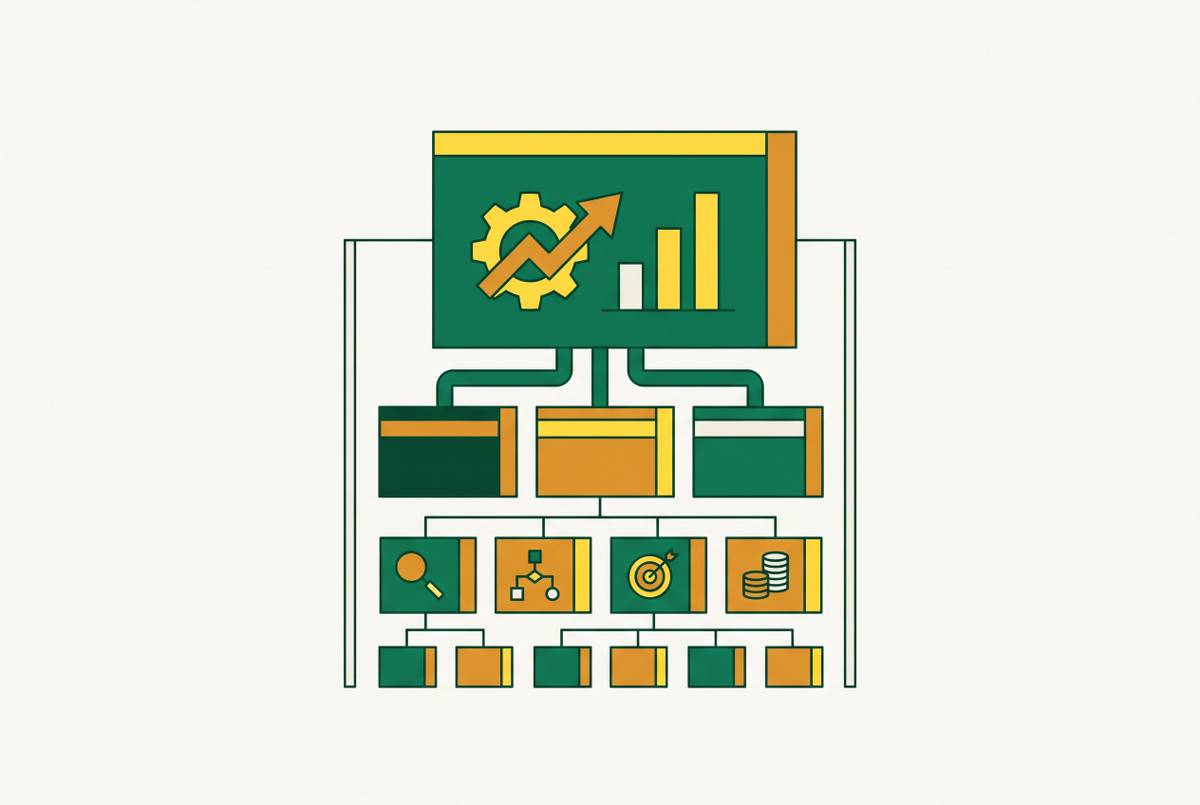
A case study now and then gives a company a chance to build trust now and then. A proof engine creates an ongoing process for collecting evidence, scoring it, tagging it by buyer objection, segment, and use case, and deploying it where it fits. A proof engine supports retrieval as much as production. A folder full of testimonials is not useful if nobody can find the one that answers today’s question.
Evidence also has different persuasive strengths. Named customer testimonials offer stronger persuasion than customer logos because they provide more than an association with a recognizable business. A logo signals a relationship. A testimonial can give the buyer a reason to believe that relationship produced something worthwhile.
The engine becomes measurable through testimonials captured per month, permission rate, sales-rep usage, coverage of key buyer segments, and conversion lift on pages containing social proof. A permission-rate target of more than half of requests approved keeps consent part of the operating model. Usage and coverage reveal whether the library serves buyers.
A monthly audit then retires underperforming assets while post-purchase prompts maintain an inflow of new evidence. Freshness protects the accumulated credibility. Otherwise, the company risks asking today’s buyers to trust a museum exhibit of the days when it met their needs.
How structured case studies function as the highest-leverage proof asset in a B2B buyer's journey
The structured case study does especially useful work in B2B because it connects a customer’s challenge, the solution, and the results. Early on, it establishes that the vendor has solved this class of problem before. Mid-cycle, it can show how a comparable company addressed a specific concern.
Later, the same story gives a champion proof to send to decision-makers who missed the earlier talks. The evidence travels without the rep needing to narrate it. As it circulates, more stakeholders encounter the vendor through a concrete customer outcome, expanding credibility beyond the original contact. The case study is both a deal asset and an introduction.
Tagging by industry, company size, use case, and persona makes that portability useful in practice. The recommended two-format approach pairs a full case study PDF for a champion who needs depth with a thirty-second summary a rep can paste into an email. Not every buyer wants the director’s cut. A short version takes less effort to read and can still keep the details that make the evidence clear.
Arcade’s sales enablement data shows that a company booked significantly more meetings when reps used interactive demos as leave-behinds than when they used static PDFs. That example reinforces the deployment principle.
How organic content distribution makes customer proof visible across the buyer journey, not just in the sales cycle
Only buyers who speak with sales see a case study shared in those talks alone. Publishing customer stories through website and blog content makes that evidence discoverable by buyers who have not yet contacted sales. The asset starts working earlier in the decision. Instead of meeting the company through a claim alone, a buyer can encounter a relevant customer result.
That is a narrower job than content marketing in general. An article on a broad topic may explain it, while a customer story shows that a given company has helped someone deal with it. Both can educate, but the story supplies evidence of capability. It gives the buyer a basis for judging the vendor.
A published case study or customer story can keep attracting buyers for years at near-zero marginal distribution cost, reducing the need to buy every new encounter. Its value does not end when the launch post slides out of view.
The tradeoff is patience. B2B SEO content typically needs several months of consistent publishing before it contributes meaningfully to pipeline. Durable credibility is the payoff.
What the Coca-Cola "Share a Coke" and Spotify "Wrapped" campaigns show about proof that buyers create for each other
A personalized beverage campaign and Spotify’s “Wrapped” frame a further shift, from evidence the company distributes to evidence people share with each other. The key distinction is who delivers it. A brand can make sharing easy without having to control every exchange, and people have more reason to trust proof when it comes from a peer. It is no longer just the vendor presenting its own case.
Spotify makes this mechanism especially clear. “Wrapped” turns a user’s listening data into an annual, shareable expression of identity. Each card is personal evidence of the user’s relationship with the product and public evidence of its value to peers. This tradition brings fresh customer proof each year without the need for a whole new creative idea.
In B2B, the equivalent is a customer forwarding a case study, posting results on LinkedIn, or mentioning a vendor unprompted in a peer conversation. Those exchanges cannot be commanded into existence. Great customer outcomes, easy-to-share formats, and permission-first evidence collection can, however, make them more natural.
This adds a different source of credibility to the accumulated evidence. The recipient has a reason to trust not only the result but also the person who chose to share it. Advertising can purchase exposure, but it cannot purchase that relationship.
How early-stage B2B teams can build a proof engine before they have the volume of customers that large brands enjoy
Early-stage B2B teams need a consistent system for the customers they already have. Start with four assets: a business case a champion can defend internally, proof grounded in a comparable customer, responses to the top five objections, and a short document written to be forwarded. These come before a sprawling content library.
At this scale, specificity beats volume. One case study that names the outcomes, spells out the customer’s situation, and quotes a stakeholder directly gives buyers more to go on than ten generic testimonials. Future buyers need clear details they can compare with their own situation. Enthusiasm is welcome, but “great team” cannot answer every procurement question.
For organic reach, the recommended entry point is content answering the questions buyers ask when comparing options or evaluating solutions. Five to ten high-intent articles close to conversion build more durable credibility than fifty trend pieces. The workflow starts by collecting evidence at the moment of customer success, then verifying and tagging it by segment and objection. Publishing full and summary versions makes it usable, while a quarterly audit removes evidence that no longer matches current buyer profiles.
Software fits where it shortens the path from customer conversation to structured, deployable case study without requiring a full editorial team. Speed helps the system work, but the system still needs to be there. As the library grows to cover key segments, objections, and use cases, each new buyer has a better chance of finding evidence that fits. That is the compounding return, credibility made visible, specific, and durable across the buyer journey.