Win-Loss Analysis Software Options for B2B SaaS Revenue Teams
Four distinct software lanes answer different questions about why deals close or slip away.
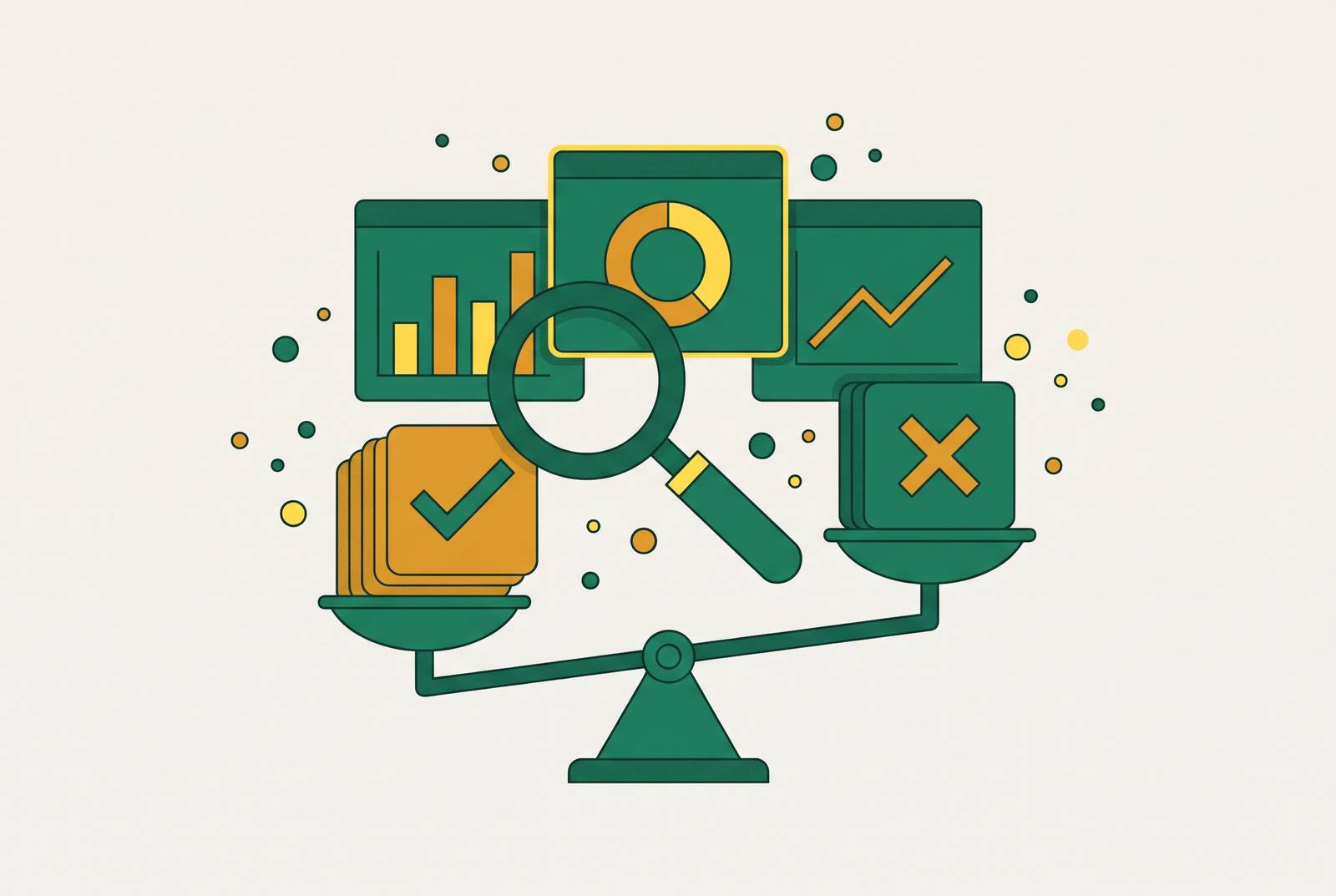
Win-loss analysis software for B2B SaaS revenue teams now spans four distinct lanes, and they do not deliver the same kind of truth. The choice is not simply about collecting feedback faster. It shapes whether a team hears why the buyer made a choice, tracks competitors, looks at how sellers work, or gets research that can stand up to questions from leadership. Buying the wrong category can make a team very efficient at answering the wrong question.
Why the data most revenue teams rely on to understand deal outcomes is structurally wrong
CRM loss reasons have a predictable bias. Reps overreport price because it deflects blame, while process failures, relationship gaps, and messaging problems get less attention. “Too expensive” is a comfortable verdict for the seller. It is less useful for a team deciding whether to change pricing, fix its sales process, or sharpen its message.
A large share of losses never goes to a competitor because buyers fear making the wrong call and choose nothing instead. CRM fields rarely record that hesitation, leaving competitive analysis to explain a contest nobody won. Interview data exposes a different set of problems, and acting on it rather than CRM reasons has produced meaningful win-rate improvement within two quarters.
How win-loss software has split into four distinct lanes, each answering a different question
AI-moderated buyer interviews show what the buyer went through and what they decided. They use open-ended, adaptive discussions with closed-won, closed-lost, and no-decision buyers, probing vague answers. Competitive intelligence platforms show how the company is doing against specific competitors across the pipeline. Their focus is competitor signals, battlecards, and win-rate trends, usually supported by faster but shallower survey-based feedback.
The other two lanes start from different evidence. Conversation intelligence and CRM-driven review examine what happened on the seller’s side, using recorded calls and deal data to find patterns across the full recorded population. Human-led research seeks a deeper, stakeholder-ready explanation through live buyer interviews, formal reports, and presentations. It trades collection speed and sample size for individual-deal depth and interpretation. These are different research designs.
AI-moderated interview platforms and what they can replace
AI moderation takes over much of the work of running interviews. A buyer can explain a decision in their own words, and the interviewer can follow up when an answer lacks detail. “The pricing felt high” becomes the start of an inquiry. Asking “high compared to what?” can separate a price objection from the assumption hiding underneath it.
The strongest objection concerns the nuance that can be lost because a human researcher brings knowledge of the client’s business that AI cannot fully replicate. Yet buyers also self-censor with the reps who ran the deal and often speak more candidly to a neutral third party or AI moderator. AI also removes moderator-to-moderator variability, giving buyers the same core questions without differences between interviewers.
User Intuition is an AI-moderated research platform that teams can use for win-loss as well as other research. Its conversational interviewers hold open-ended, adaptive discussions across 80+ languages and have access to a large panel of people from around the world. Its panel studies close within 24 hours. That timing applies to panel studies, rather than establishing how quickly a particular company’s closed-deal buyers will respond.
Perspective AI gives buyers a link to a text or voice interview informed by deal context. The system produces a transcript, themes, quotes, and a synthesized debrief within hours. Its proposition is depth per conversation without the high price or multi-week turnaround associated with traditional agencies.
Koji uses an asynchronous AI moderator, removing scheduling conflicts that restrict interview volume. Teams can invite every closed opportunity. Open-ended probing combines with scales, single choice, multiple choice, ranking, and yes/no questions to produce both quotable accounts and chartable data. It starts free with 10 interview credits, offers low per-interview costs for qualified participants without a subscription, and automates thematic analysis. No analyst has to tag the transcripts.
Competitive intelligence platforms with bundled win-loss are stronger on opponents than reasons
Competitive intelligence platforms began with competitor information. Adding win-loss collection broadens their evidence, but it does not erase that starting point. Their strength is turning competitive signals into something a rep can use during a deal. That is valuable work with a different diagnostic limit.
Klue combines a competitive intelligence repository, win-loss analysis, and AI-assisted battlecard workflows. Its Compete Agent generates deal-specific competitive briefings within minutes of a competitor being mentioned on a call. Battlecards reach reps through Salesforce and Slack. Its survey-based win-loss collection is faster but shallower than interviews, so convenient delivery should not be confused with a detailed explanation of an individual loss.
Crayon aggregates competitor signals from across the web and combines them with CRM win-loss data. That information goes into battlecards, competitive alerts, and reports on win-rate trends. Its survey-based win-loss approach makes the same tradeoff between diagnostic depth, speed, and workflow fit. Neither platform’s competitive repository is interchangeable with the buyer’s account.
The distinction becomes practical when the question changes from “What is this competitor doing?” to “Why did this buyer reject the offer?” CI is strongest when the team already understands its loss patterns and needs to track market movement and equip reps. As a primary way to discover those patterns, it leaves gaps that buyer interviews are designed to fill.
Conversation intelligence and CRM-driven deal review cover every recorded deal, but from the seller’s side
Conversation intelligence covers every recorded deal, making it useful for spotting repeated objections, competitor mentions, talk ratios, and engagement differences. CRM-driven review adds patterns in stage movement and other deal activity. Together, they provide a broad view of how selling happens.
Gong analyzes those recorded-call patterns and is used by companies including LinkedIn, ADP, Nasdaq, and Dropbox. It does not conduct post-decision buyer interviews or surveys. Instead, it infers win-loss drivers by comparing successful and unsuccessful deal conversations. A call recording and a buyer interview are evidence of different things.
An AE trying to save a deal has a different purpose from a neutral interviewer asking why the decision went against the vendor. Buyers’ candid post-decision reasoning can therefore remain outside the call record. Forrester notes that transcript analysis can uncover issues while deals are still open, so teams can act on them before the deal closes. It also makes conversation intelligence a useful baseline for interviews.
Human-led research services earn their cost through depth and stakeholder credibility
Human-led research earns its cost when interpretation must go deeper. Trained researchers talk to buyers live by phone or video, ask for details about each deal, and turn what they learn into formal reports or presentations ready for the board. Those capabilities suit questions that leadership needs to examine closely. The constraints are equally real, including scheduling, cost, and a limited number of interviews per quarter.
TruVoice by Corporate Visions combines automated buyer feedback with sales coaching. It collects and analyzes feedback to identify which deals were winnable and the tipping points that shaped them. Its assessment of seller skills supports personalized coaching. It also surfaces buyer-identified blind spots in the sales experience and tracks changing perceptions of competitors.
Satrix Solutions offers customized programs using in-depth individual interviews and surveys. Its work uses unbiased, unfiltered buyer feedback to help teams repeat successes and refine the sales approach. Winxtra works with enterprise and mid-market B2B companies, using both human-led interviews and AI-driven sentiment analysis. It extends beyond retrospective deal review through mid-contract customer interviews and proactive churn risk alerts. Anova Consulting Group, DoubleCheck Research, and other human-led research services are further options in this lane.
External researchers still face a tradeoff between candor and context. Third-party interviewers unlock more honest feedback than internal teams, and organizations using them report meaningfully higher satisfaction with feedback quality. But an outsider may know too little about the business to grasp what a subtle answer means. Having a human do the work does not by itself solve that problem. Its value lies in the depth of inquiry and the work of turning evidence into an explanation stakeholders can use.
What real programs found when they stopped trusting CRM data and interviewed buyers instead
Price often masks a more addressable problem. Bizzabo’s win-loss work found that deals lost over price were mostly outside its ideal customer profile. For its intended buyers, integrations, scalability, and data cleanliness were more important. The team consequently refocused targeting, positioning, and its sales approach and left a broad pricing project unlaunched. The finding changed which problem deserved attention.
Reveal used evidence from buyers to help its leaders make decisions. Co-founder Simon Bouchez, formerly Reveal’s CEO and now Crossbeam’s COO following Reveal’s 2024 merger, personally sponsored the program. Reveal’s win rate increased by a quarter. Bouchez described the company as “now able to make strategic decisions based on data rather than feelings”. The point was not simply to correct a field in the CRM, but to make that evidence usable by the people choosing the company’s direction.
The cases reveal different consequences of the same information gap.
How to match the tool to the question your revenue team actually needs answered
Teams should start with the evidence they lack when deciding what to buy. When the gap is post-decision reasoning, buyer interviews are the relevant method. When it is full-population patterns in selling behavior, CRM and conversation intelligence are the better fit. When the need is competitive tracking and in-deal guidance, CI belongs in the evaluation. A managed research service suits deeper interpretation, but is a poor match for a requirement defined chiefly by continuous volume at low cost.
Pattern analysis is the next test, because a stack of deal summaries is not yet an explanation of recurring losses. Individual summaries support post-mortems, while broader analysis can change how reps sell. Teams should check how many deals a platform needs before the patterns it finds can tell them something useful. Collection speed alone does not answer that question. Nor does an impressive transcript show that the system can link what it learns across deals.
Using findings requires workflow fit and program ownership. Teams should assess whether guidance reaches reps inside their existing tools while a deal is active. Managed services handle program design, interview logistics, and analysis, while software-first platforms require a dedicated internal owner. Someone still has to run the program. A platform designed for a mature CI function will underperform when nobody has time to operate it.
Most mature B2B SaaS revenue teams need at least two lanes. A buyer interview layer supplies causal reasoning, with AI or human moderation chosen according to volume and budget, while CI or conversation intelligence supports tracking and in-deal guidance. Teams need to assess how quickly an interview finding reaches the rep on the next competitive deal. Tool choice can make that loop take days or quarters.
That loop can also produce customer proof. The same conversations contain structured, specific evidence that can become case studies and other deal-closing assets. A systematic win-loss program is already collecting much of the raw material. Teams still need a system to package that evidence for the next prospect.